

Eddy Current Testing (ET)
Detecting surface and near-surface indications without coating removal. Fast, reliable inspections support quality control, safety and asset integrity.
What is Eddy Current Testing?
Reliable inspection without coating removal
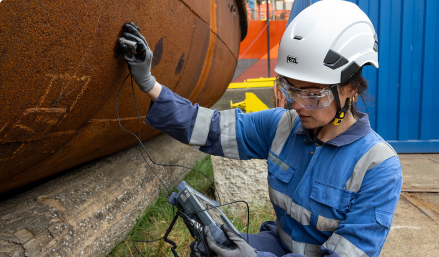
Eddy Current Testing (ET) is a versatile Non-Destructive Testing method used to detect surface and near-surface indications in conductive materials without removing protective coatings. The method uses an electromagnetic probe to generate a magnetic field that induces eddy currents within the material.
Discontinuities such as cracks, corrosion or material variations disturb these currents, causing measurable changes in the probe signal. In addition to flaw detection, Eddy Current Testing can be used for coating thickness measurements, material identification and heat treatment monitoring.
Benefits
- No coating removal required for many inspection applications
- Detection of small surface and near-surface indications in conductive materials
- Immediate inspection results with portable equipment
Used in these markets:
EDDY CURRENT TESTING
Eddy Current testing Methods

TYPICAL APPLICATIONS
Typical Applications of ET
Eddy Current Testing is commonly applied where rapid, non-invasive inspection of conductive materials is required.
|
|
|
|
|
|
|
|
Performance overview
Strengths and limitations of eddy current testing
Strenghts
- Inspection can often be performed without removing protective coatings
- Highly sensitive to small surface and near-surface indications
- Immediate results displayed during inspection
- Portable equipment suitable for field and on-site applications
- No couplant liquid or gel required
- Minimal surface preparation required
- Suitable for objects with complex geometries
- Can be used for coating thickness measurements, material identification and heat treatment monitoring
Limitations
- Can only be applied to electrically conductive materials
- Requires a higher level of operator training and interpretation skills
- Surface roughness and finish can influence inspection results
- Reference standards are often required for calibration and setup
- Limited depth of penetration compared with volumetric NDT methods
- Certain indication orientations may be difficult to detect depending on probe configuration
Cases
Proven in practice
Discover how we support clients across industries with inspection, testing and corrosion expertise. Our cases highlight practical solutions and measurable impact in complex environments.


Making sure heavy lifting gear meets the highest standards
Making sure heavy lifting gear meets the highest standards
Downloads
Explore our service in detail


Contact
Get in touch!
Contact form
Whether you have a general question or a specific request, our experts are ready to assist you.
I have a
"*" indicates required fields

Frequently Asked Questions
Questions about this service?
Lorem ipsum dolor sit amet consectetur. Fermentum tortor pellentesque lacus malesuada lobortis quisque elementum elit adipiscing. Mauris est id ut sed. Tristique tellus vestibulum posuere dignissim. Congue.
See also
Related products & services
 Service
Magnetic Testing (MT)
Detect surface and near-surface defects in ferromagnetic materials. Reliable inspections support safety, quality and asset integrity.
 Service
Penetrant Testing (PT)
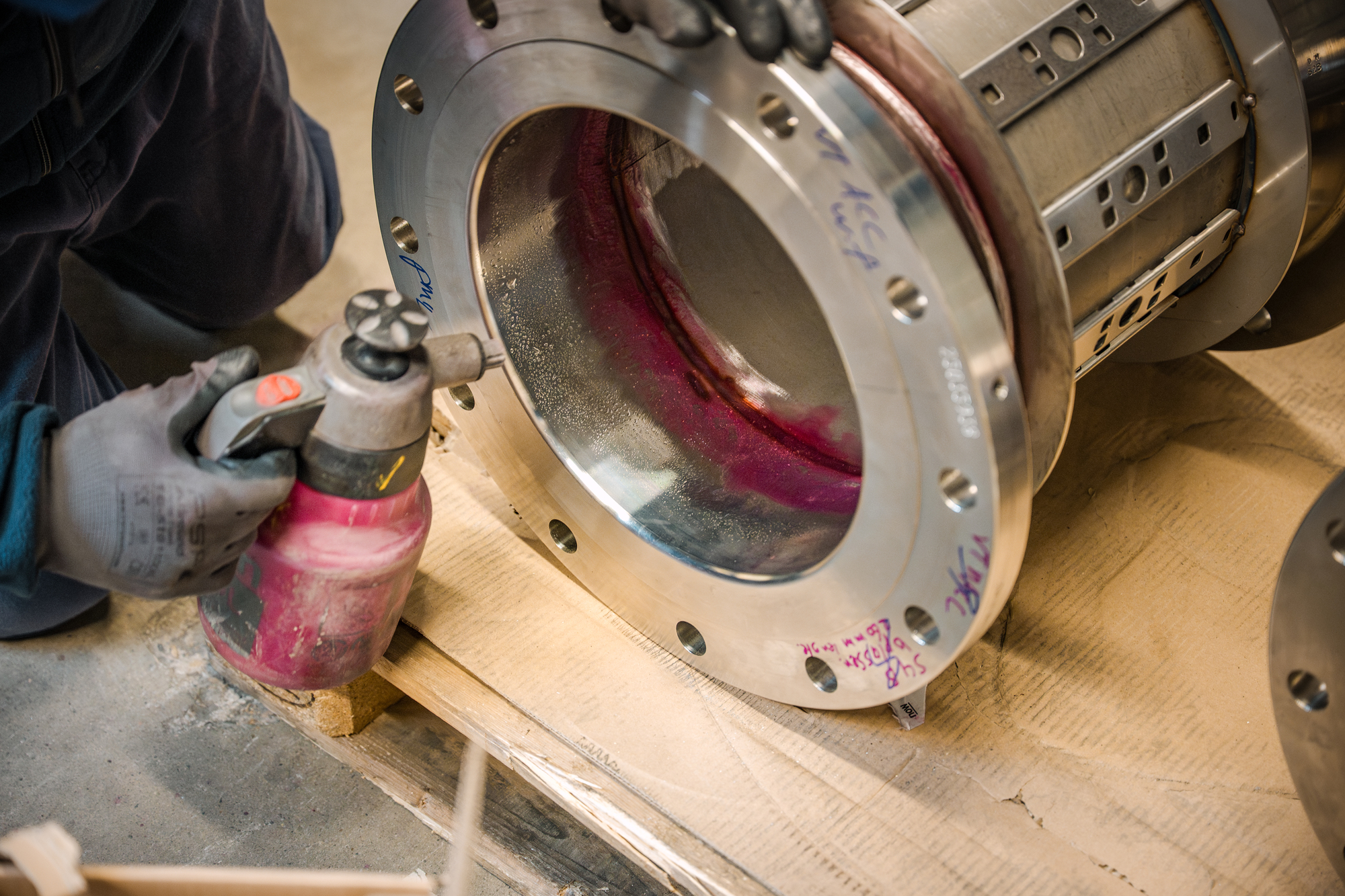
Detects surface-breaking indications in a wide range of materials. Reliable inspections support quality, safety and asset integrity.
 Service
Ultrasonic Testing (UT)
Uses high-frequency sound waves to detect internal defects and measure material thickness without damaging the component.